You are not shopping for a vacuum sealer because you want one. You are shopping because the setup has become a bottleneck: bags failing mid-service, product lost to freezer burn, prep that outruns the labor you have. This page is for that decision, whether you run a restaurant, a catering operation, a deli counter, or a production kitchen. By the end you will know which category of machine fits your volume, which specifications change the workday, and when a home unit is still the honest answer.
Como asociado de Amazon, gano por las compras que califiquen. Esto no cambia el precio que pagás. Más información
As an Amazon Associate I earn from qualifying purchases.

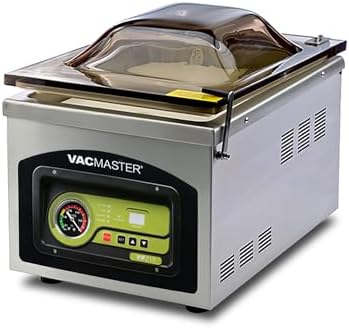


Chamber vs external sealer at commercial volume

This is the decision that matters. Everything else on the page is a detail of it.
An external sealer, also sold as a bar or suction sealer, clamps the open end of a channeled bag onto a sealing bar. The pump pulls air through the channels in the film, then the bar heats and closes the bag. Loading is quick, odd shapes are easy, and it is the cheaper of the two. What it does not tolerate is liquid: juice reaching the seal area either travels toward the pump or sits between the layers of film and prevents a clean weld.
A chamber sealer puts the entire bag inside a closed compartment. The pump evacuates the chamber, the pressure inside the bag falls with it, and the bag collapses onto the product by itself. There is no channel to clog, because the air never travels through the bag. That single difference is why a chamber handles marinades, sauces, brined product, raw meat with purge, and soups without a workaround, and why it can use smooth, untextured bags instead of channeled ones.
The trade is rhythm and mass. You load the chamber, close the lid, run the cycle, vent, open, unload. Each cycle handles what fits inside, often one layer, sometimes two if the machine carries a second seal bar. A bar sealer instead seals one bag after another without waiting, which suits packing a single item all afternoon.
The practical rule: if a meaningful share of what you seal is wet, marinated, or raw with juices, buy the chamber. If you seal dry or frozen solid portions in small batches and counter space is short, a commercial-duty bar sealer does the job. At volume the sealing head stops being the bottleneck before anything else does; loading, unloading, cleaning, and bag inventory take over.
The four categories, in one table

The table compares categories, not brands. Investment tier is relative within this page, not a price: actual prices are set on each product listing and change over time.
| Category | Volume fit | Bag type | Liquids | Footprint | Investment tier | Operator skill |
|---|---|---|---|---|---|---|
| Chamber, countertop | Low to mid commercial volume: deli counter, cafe prep, smaller catering jobs | Smooth chamber bags, several gauges | Yes, including sauces and marinades | Counter depth, plus clearance for the lid | Mid | Low: preset programs do most of the work |
| Chamber, floor or large | Mid to high volume: production prep, butcher counter, central kitchen | Smooth bags, larger sizes | Yes, in larger batches | Dedicated floor space, often a fixed install | High | Low to moderate: more capacity, more surface to clean |
| External bar sealer | Low volume, or a single-item flow alongside other equipment | Embossed or channeled bags and rolls | Limited: moist mode, drip tray, or freeze first | Counter space and clearance to open the lid | Low | Low |
| Automatic or semiautomatic | High volume, repetitive runs of the same product | Depends on the format: smooth or channeled | Depends on the format | Largest: usually a fixed installation | High | Moderate: setup and changeover, less handling per bag |
Two things the table cannot tell you: the duty rating of the machine, and whether parts are stocked in your country. Both belong in the questions you ask before you buy.
If two rows fit, take the simpler one: a chamber sealer used twice a week is a worse purchase than a bar sealer used every service.
Features that matter at volume

Ignore the biggest number on the listing. These are the features that decide whether the machine survives a real prep schedule.
- Pump type. Oil rotary-vane pumps pull a deeper vacuum and tolerate long duty cycles, at the cost of scheduled oil changes and a bit more care. Dry and diaphragm pumps need less maintenance but have duty limits that matter when the machine runs back to back. Ask what the duty rating is, in plain language, for the schedule you actually keep.
- Seal quality and seal width. A double seal gives you two heat lines instead of one, so a fold or a bad spot on the bag does not automatically mean a failure. Seal width matters more as bags get larger and product gets wetter. Look for separate control of seal time and temperature.
- Cycle time, measured honestly. Published cycle times usually assume an empty chamber. The figure that matters is the full cycle with your typical load: lid down, vacuum, seal, vent, lid up. Ask for a demonstration with your product, or a video of a loaded cycle.
- Chamber size and usable height. Measure the largest bag you intend to use and the tallest item you intend to seal, then add clearance. Height is the limit people forget, and it is the one that rules out brining containers and deep portions.
- Cleaning and sanitation. Stainless steel, a removable drip tray, smooth chamber walls, and no exposed wiring in the wet zone. If the seal bar and gasket cannot be wiped down in a couple of minutes, they will not be wiped down during a rush.
- Controls and presets. Vacuum level, seal time, and a manual mode for the odd product are the useful ones. A new hire should be able to run it on their first shift.
- Parts and service. Gaskets, seal bar tape, lid struts, and oil if the pump needs it. One with no parts channel becomes scrap the day a gasket tears.
- Placement. It needs ventilation, a level surface, and an electrical check against your kitchen before delivery.
Common sealing mistakes at volume

Most failures at volume are not machine failures. They are habits that a home unit tolerated and a commercial schedule exposes.
- Filling the bag to the edge. Leave an inch and a half to two inches of flat film for the seal. Product at the seal line is the most common cause of a weak weld.
- Sealing wet product in a bar sealer. Wipe the inside of the bag, fold it over a lip while filling, or move that product to a chamber machine. A moist mode helps; it does not fix a puddle.
- Overloading the chamber. Stacking above the usable height or laying product across the seal bar produces a bag that looks sealed and leaks within a day.
- Running a light-duty machine on a heavy schedule. It shows up as weak vacuum, slow cycles, and premature pump wear, and nobody notices until the repair bill arrives.
- Skipping the daily wipe. Residue on the gasket or the seal bar creates a channel, and the vacuum drops gradually enough that nobody notices until product starts spoiling.
- Bag inventory chaos. Wrong gauge for bones or shells, mismatched sizes, reused bags. Pick precut bags or rolls once, and keep one gauge per task.
- No rotation discipline. Vacuum slows spoilage; it does not stop time. Date, product, and initials on every bag, and a first-in-first-out rule that the whole team follows.
Pros and cons
| Advantages at volume | Trade-offs |
|---|---|
| Consistent seal on wet and dry product | Higher purchase tier than a bar sealer |
| Smooth bags, usually cheaper per bag than channeled ones | Bag sizes are bounded by chamber size; large cuts need a larger machine |
| Fewer failed seals means less rework and less discarded product | Batch rhythm: you wait for a cycle instead of sealing continuously |
| Stainless construction and removable parts that survive daily washing | Weight and footprint; it wants a permanent spot |
| Serviceable: gaskets, seal bars, and pumps are replaceable | Oil pumps need scheduled oil changes and correct oil |
| One machine covers raw, cooked, liquid, and frozen product | Learning curve on vacuum level and seal time for each new product |
Is the jump from a home unit worth it?
Sometimes, and the honest answer depends on counts you already have.
Run three numbers from last month: bags sealed, bags failed, and product thrown away after a bad seal or freezer burn. Add the time spent re-sealing and the gap in bag cost between channeled and smooth film. The machine pays for itself when those lines, added up over a year, exceed the difference in purchase tier. That is arithmetic for your own invoices; any page that claims a payback period without your numbers is guessing.
Two honest exceptions. If you seal in bursts — one big prep day, then nothing for a week — a home unit with disciplined bag handling may still cover you, and the guide to home vacuum sealers explains where that stops being true. And without the volume, a chamber sealer sitting idle is a worse purchase than a bar sealer that runs every day. At that earlier stage, the FoodSaver Everyday covers the entry range without pretending to be commercial.
Where the jump does pay: a home unit run at commercial pace is the fastest way to burn out a pump, and its bags cost more per seal than smooth chamber film. The saving is the bags, the rework, and the product you stop throwing away.
Maintenance and durability
A commercial sealer is built to be maintained, not to be maintenance-free. The machine that lasts is the one with a cleaning routine and a parts supplier, not the best brochure.
- Daily: wipe the seal bar, the gasket, and the chamber; dry everything before closing the lid; empty the drip tray.
- Weekly: inspect the gasket for cuts and flattening, clean under the lid, and seal a test bag to confirm the vacuum is where it should be.
- Scheduled: change pump oil on the interval the manual specifies, replace seal bar tape when it chars or lifts, and replace gaskets at the first sign of a channel leak.
- Stock consumables: one spare gasket, one roll of seal tape, oil if applicable. Waiting a week for a gasket is a week of lost capacity.
- Placement: level surface, stable power, away from grease traps and open flames, with the ventilation the manual asks for.
Durability also depends on where you buy. A machine from a supplier who stocks parts and answers the phone outlives an identical one bought at the lowest tier with no service path.
Frequently asked questions
What is the difference between a commercial and a home vacuum sealer?
A commercial machine is built for repeated cycles, with a heavier pump, a more serviceable seal bar, and replaceable parts. A home unit is built for occasional use, and commercial pace is what wears it out.
Can a chamber sealer handle liquids?
Yes, and that is the main reason to buy one. Because the whole bag sits inside the evacuated chamber, sauces, marinades, brines, and soups seal without a freeze-first step or a drip tray.
Do chamber sealers need special bags?
They use smooth, untextured bags with no air channel, which is a different consumable from the embossed or channeled bags an external sealer needs. Both must be food-grade and suited to the product’s weight and edges.
How much space and power do I need?
Measure the footprint, add clearance for the lid to open fully, and leave landing space for loaded bags. Check the manual’s electrical requirement against your kitchen circuit first.
What maintenance should I plan for?
A daily wipe of the seal bar, gasket, and chamber; a weekly gasket inspection and test seal; scheduled oil changes if the pump uses oil; and replacement of seal tape and gaskets as they wear. Keep one spare of each on hand.
Countertop or floor model?
Countertop suits a deli, cafe, or smaller catering operation where the machine shares a work surface. A floor or large model suits a production schedule where it runs most of the day in a fixed spot.
Choose the category, then the machine
Pick the category from what you seal, not from the largest number on a specification sheet. Wet, marinated, and raw product points to a chamber. Dry or frozen portions in small batches point to a commercial bar sealer. Repetitive runs of one product point to an automatic.
Then do the boring part: measure the space, count your seals for a week, and confirm that gaskets and seal bars are available before you pay. That is the difference between a machine that earns its place and one that becomes a shelf.
If you are still deciding whether your volume justifies the jump, start with the guide to home vacuum sealers, and come back when the counts say you have outgrown it.